

Rethinking Digital Resilience
 Why a Distributed Cloud Is the Future of Data Protection
For decades, individuals and organizations have relied on a patchwork of storage media - hard drives, SSDs, DVDs, USB keys, NAS devices, and more - to safeguard their digital lives. Each medium offers strengths in price, speed, or convenience, yet all share the same fundamental weakness: they fail. Hardware ages, sectors degrade, devices are lost or stolen, and disasters such as fire or flooding can wipe out years of irreplaceable memories.
The rise of commercial cloud storage promised a solution, but introduced new risks: centralization, opacity, dependency on proprietary platforms, and exposure to global-scale cyber threats. Storing personal data in distant data centers - often in other countries - means surrendering control to corporations whose business models rely on analyzing user information, even when “only for advertising or statistical purposes.”
After countless incidents of data loss, corrupted archives, and vanished photos, it is time to rethink our approach.
This white paper presents a new paradigm: an Distributed Cloud Architecture built around a Data Container - a virtual, self‑managed storage entity that prioritizes redundancy, encryption, accessibility, and resilience.
1. The Problem: Traditional Storage Is Fragile
1.1 Physical Media: Strengths and Limits
Every storage medium has advantages:
- Hard drives: low cost, high capacity
- SSDs: speed, durability
- Optical discs: longevity, offline protection
- USB keys: portability
- Finite lifespan: mechanical wear, flash cell degradation, bit rot
- Susceptibility to theft or loss
- Environmental risks: fire, humidity, magnetic fields
- Human error: misplacement, accidental deletion
1.2 Centralized Cloud: A New Set of Risks
Cloud storage solved some problems but created others:
- Data stored abroad, subject to foreign jurisdictions
- Single points of failure (provider outages, account lockouts)
- Attractive targets for hackers
- Opaque proprietary systems
- Data mining for commercial purposes
2. Principles of Modern Data Protection
A resilient system must satisfy several foundational principles. These principles guided the design of the P2P cloud model.
2.1 Accessibility
Data must remain accessible:
- Online or offline
- On a local network or across the internet
- By the owner or by explicitly authorized individuals
2.2 Encryption
 Security must be intrinsic:
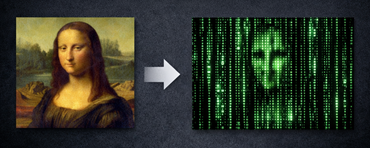
- Files encrypted end-to-end
- Only the owner controls the keys
- Compromised storage nodes reveal nothing
- Zero-knowledge architecture
2.3 Compression
Compression is often misunderstood. While a corrupted sector affects a compressed file more severely, the global strategy matters more:
- For the same disk space, two compressed copies offer better resilience than one uncompressed copy
- Compression reduces bandwidth and storage costs
- Modern algorithms support error detection and partial recovery
2.4 Fragmentation
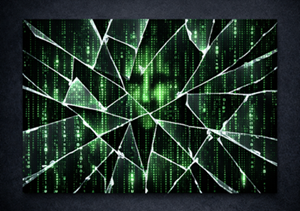 Files are divided into smaller fragments before being distributed across different nodes.
This fragmentation ensures that no single node ever holds a complete file. Even if an attacker
manages to access one or several nodes-and even if they somehow possess the decryption key-
the isolated fragments are meaningless on their own.
Files are divided into smaller fragments before being distributed across different nodes.
This fragmentation ensures that no single node ever holds a complete file. Even if an attacker
manages to access one or several nodes-and even if they somehow possess the decryption key-
the isolated fragments are meaningless on their own.
Fragmentation therefore adds an additional layer of security on top of encryption, making
unauthorized reconstruction of the original file practically impossible.
2.4 Cloning
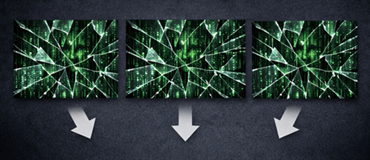 Redundancy is non-negotiable:
- Every file must exist in multiple independent copies
- Copies must be geographically distributed
- Recovery must be automatic and transparent
2.5 Updating
Backups must be:
- Continuous
- Incremental
- Real-time when possible
2.6 Integrity Checking
Silent corruption is one of the most dangerous threats:
- Files may appear intact but contain altered bytes
- Regular integrity checks detect and repair issues early
- Hash-based verification ensures authenticity
2.7 Offsite Protection
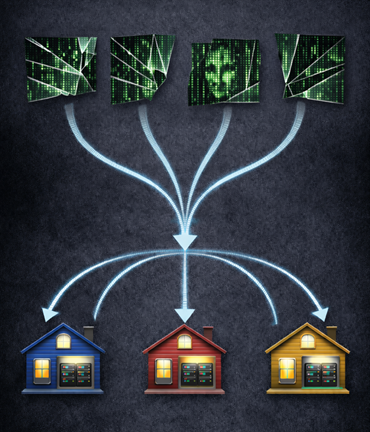 Local redundancy is not enough:
- Fire, theft, or natural disasters can destroy all local copies
- Offsite storage ensures survival
- Distribution across multiple peers eliminates single-location risk
2.8 Versioning
Data evolves. Backups must reflect that:
- Multiple versions preserved
- Ability to revert to earlier states
- Protection against accidental edits, deletions and ransomware
2.9 Just-in-Time Synchronization
No more waiting for nightly backups:
- Changes propagate instantly
- Redundancy updated continuously
- Recovery points always up to date
3. The Solution: A Distributed Cloud Built on a Data Container
3.1 The Data Container Concept
Imagine a hybrid system: the reliability of traditional storage combined with the flexibility of the cloud. A data container is a virtual storage unit that abstracts the physical medium, focusing on:
- Data, not devices: No need to track storage locations—just your content, thanks to abstraction from physical media.
- Redundancy, not location: Multiple, geographically distributed copies for resilience.
- Accessibility, not infrastructure: Files available whenever and wherever you need them.
3.2 Why choose a distributed architecture?
A distributed architecture provides several key advantages:
- No central authority
- No single point of failure
- Automatic distribution across trusted peers
- Scalable storage without vendor lock-in
- Local and remote redundancy combined
3.3 How It Works
- The user creates a data container.
- Files are encrypted, compressed, and split into redundant fragments.
-
Fragments are distributed across:
- Local devices
- Trusted friends/family devices
- Optional community nodes
- Integrity checks and updates occur continuously.
- Any missing fragment is automatically reconstructed from others.
4. Benefits of the P2P Cloud Model
4.1 True Digital Sovereignty
A breath of freedom for your digital life:
- No corporate surveillance
- No foreign jurisdiction
- No opaque algorithms
- No vendor lock-in
4.2 Extreme Resilience
Redundancy across multiple peers ensures:
- Protection against hardware failure
- Protection against disasters
- Protection against cyberattacks
- Protection against accidental deletion
4.3 Cost Efficiency
Eliminate unnecessary capital expenditure. There is no need for expensive, dedicated servers:
- Leverage existing resources; spare disk space and infrastructure are intelligently repurposed until you reclaim them.
- Security by design, not by infrastructure: robust protection without the need for energy-intensive, fortress-like data centers.
- Storage scales naturally with the network, as capacity expands organically alongside your community.
4.4 Privacy by Design
True privacy isn’t an add-on; it’s the foundation.
- Zero-knowledge encryption: data is encrypted as soon as it is loaded into the data container.
- End-to-end control: you decide who accesses your data, with no intermediaries.
- No centralized logs.
4.5 Universal Accessibility
True accessibility transcends simple availability; it requires a system that is inherently resilient and borderless.
- Works online or offline
- Works across devices
- Works across continents
5. Conclusion: The Future of Storage Is Distributed
We live in a world where our memories, our work, and our identities are digital. Yet the systems we rely on to protect them remain fragile, centralized, and vulnerable.
A Distributed Cloud architecture, powered by a Data Container, represents a fundamental shift: from devices to data, from ownership to resilience, from dependency to sovereignty.
It is time to free ourselves from the limitations of traditional media and reclaim control over our digital lives.
The future of data protection is distributed, encrypted, redundant, and user-centric. The future is P2P.